What’s the difference between cleaning and sanitising? Can I sterilise?
Cleaning is the process of using a cleaning agent, soaking as well as mechanical action to remove grime or residue from the surface of brewing equipment. Sanitising is using a sanitising an agent to kill most of the bacteria at a microscopic level. You cannot effectively sanitise if you are not starting with a clean environment. Sterilise is often said in regards to what people mean as sanitise
How long should my beer ferment?
Fermentation time depends on temperature and style; ales usually ferment 2–3 weeks at around 18–20°C, while lagers often need 3–4 weeks at 13–14°C. Always confirm with your hydrometer: if two readings 24–48 hours apart stay the same, fermentation is done and you can move to bottling.
What does the hydrometer do? Why do I need it?
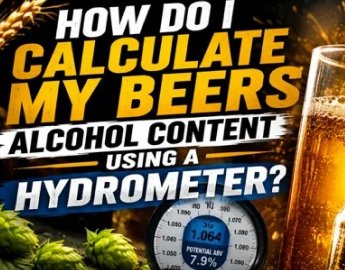
A hydrometer measures the specific gravity (density) of your beer to show how much sugar is still in the liquid compared with water. It tells you when fermentation is finished and helps you estimate alcohol content, so you don’t bottle too early and avoid weak or over‑carbonated beer.
How can I use my hydrometer to calculate Alcohol %?
Take a “starting” gravity reading before fermentation begins (Original Gravity) and an “end” reading once fermentation is complete (Final Gravity). Then roughly calculate ABV as: (OG−FG)÷7.36(OG−FG)÷7.36, which gives an approximate alcohol by‑volume percentage.
Why do you use carbonation drops in the bottle?
Carbonation drops are small, pre‑measured doses of sugar that dissolve quickly and give consistent, easy‑to‑control fizz when the beer undergoes a small secondary fermentation in the bottle. They’re handy because they remove the need to carefully weigh and mix priming sugar, helping you avoid under‑ or over‑carbonated bottles.